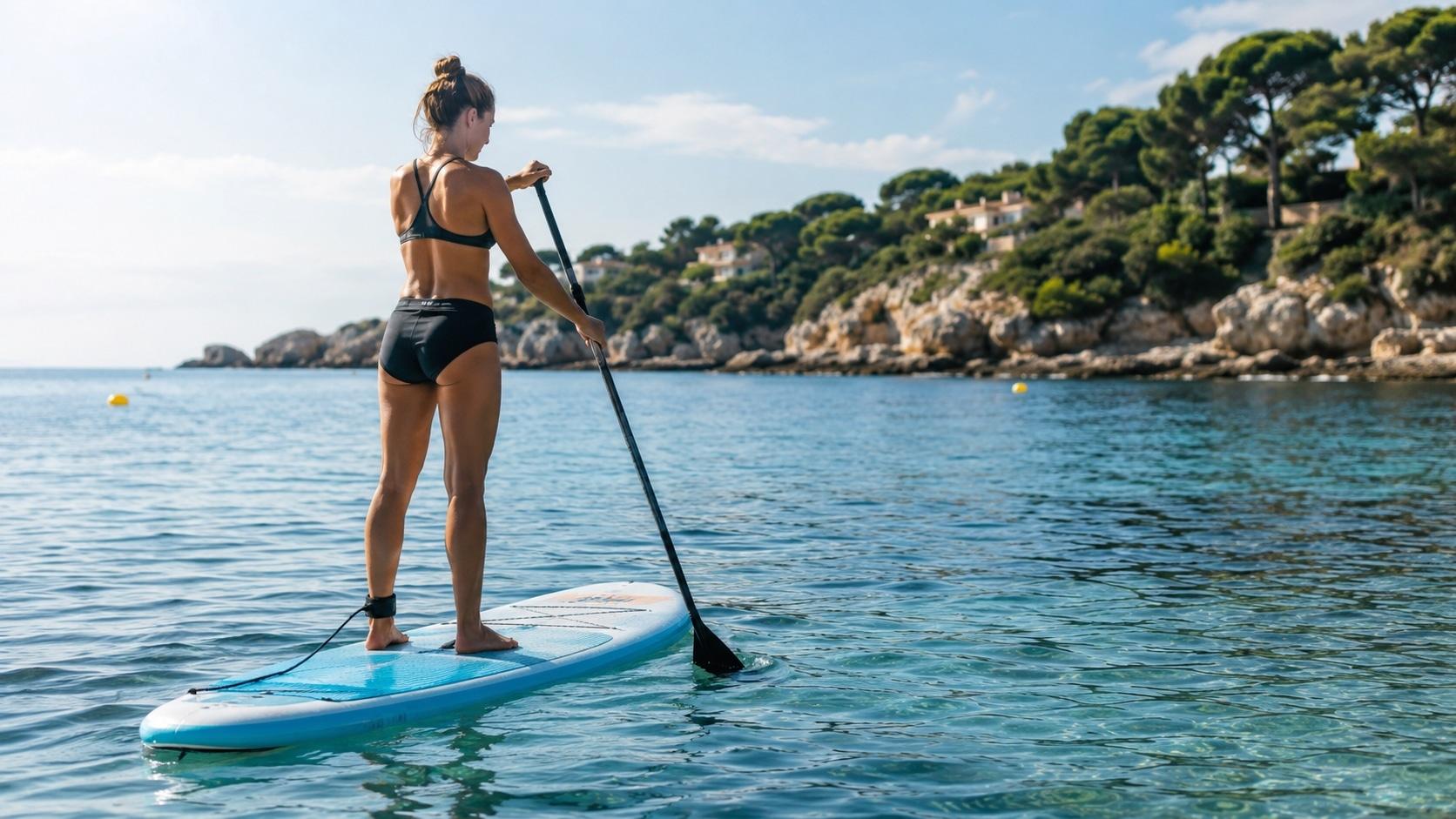
Stand-up paddling (SUP) in France is governed by specific regulations that have undergone major changes in recent years.
A regulatory update on Stand Up Paddle (SUP) published in the Journal Officiel on April 28, a decree amending the French Sports Code significantly changes the provisions governing the activity. Indeed, SUP is no longer subject to the health, safety and technical obligations of the French Sports Code relating to “canoeing, kayaking and all other paddle-powered craft”, but is now governed by the regulations of the French Surfing Federation.
Understanding SUP regulations in France
– Summary taken from the FFS regulations –
Following the awarding of the Stand Up Paddle Board delegation, the Fédération Française de Surf has drawn up a set of rules to govern the conditions of practice in different environments and for all SUP practices, whether free or supervised.
Today, this regulatory basis is still in force, supplemented by Division 240, which governs safety equipment at sea.
Stand Up Paddle sailing conditions
SUP under 3.50 m: beach gear
For SUPs in the beach craft category (length less than 3m50), navigation must be :
- diurnal only
- limited to 300 metres from the shore
Wearing a leash is compulsory, as it keeps you connected to the board.
No additional safety equipment is required in this area.
SUP over 3.50 m: extended navigation
SUPs over 3.50 m (11’6 and over) are no longer considered beach equipment.
They can :
- exceed 300 metres
- sail within 2 nautical miles of a shelter (approx. 3.7 km)
- day navigation only
Inflatable SUPs
Inflatable SUPs over 3.50 m must meet specific requirements:
- reserve buoyancy
- remain buoyant even in the event of partial deflation
- pass a residual buoyancy test
Without these conditions, they remain limited to 300 meters.
Mandatory SUP equipment (beyond 300 m)
Beyond 300 metres, safety equipment becomes mandatory in accordance with Division 240.
You will need :
- a buoyancy aid (minimum 50N) or wetsuit worn at all times
- a waterproof luminous locator with a battery life of at least 6 hours
- a mandatory leash
These rules are still fully applicable in 2026.
Special case: supervised activities
Beach gear may exceed 300 meters (up to 2 miles) for organized activities if :
- presence of a qualified supervisor
- immediate intervention possible
- mandatory wearing of buoyancy equipment
SUP river regulations
The practice of whitewater is governed by specific rules:
- the leash is forbidden
- buoyancy vests are mandatory
- closed-toe shoes must be worn
- helmets are compulsory from class 3 upwards or depending on conditions
It is also necessary to comply with local regulations specific to each zone.
SUP framing conditions
Only holders of a diploma may supervise for remuneration:
- CQP
- BAPAAT
- BEES
- BPJEPS
- DEJEPS
- DESJEPS
in the disciplines of surfing, sailing, canoeing-kayaking and towed gliding, within the regulatory scope of each certification.
Supervision of SUP in the waves is reserved for holders of a surfing diploma.
Supervision of minors (ACM)
Since July 1, 2016, SUP activity in Accueil Collectif de Mineurs must comply with the conditions of practice and supervision referenced in the Appendix 18 sheet relating to surfing activity.
Recent developments and local regulations
Even if the regulatory base remains stable, certain changes need to be taken into account:
- tighter controls in tourist areas
- increasing number of municipal bylaws (no-go zones, channels, bathing areas)
- increased vigilance with regard to safety equipment
Each practice area (sea, lake, river) may have its own specific rules.
Conclusion
Stand Up Paddle regulations in France today are based on :
- French Surfing Federation
- Division 240
- additional local regulations
It is still in force in 2026. It is essential to respect navigation distances, equip yourself correctly and check local rules before going out.